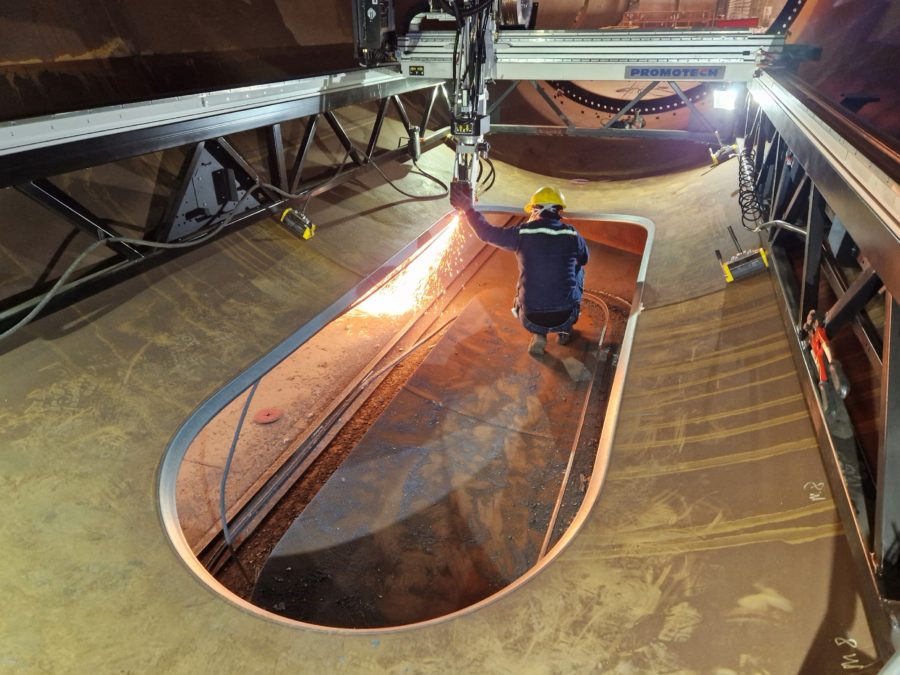
Bevelling machines, also referred to as chamfering machines, are integral to numerous industrial applications, facilitating the creation of bevelled edges on materials such as steel, stainless steel, aluminium, and plastic. These machines serve critical functions, including weld preparation, mitigation of stress concentrations, and aesthetic enhancement.

Selecting the appropriate beveller requires an evaluation of the material properties, the intended application and the required bevel specifications.
In the PROMOTECH product range, bevelling machines are classified into Plate Bevellers and Pipe Bevellers, which are further distinguished by their operational configurations: stationary, automatic, or manual.
Understanding Spindle Speed and Its Importance
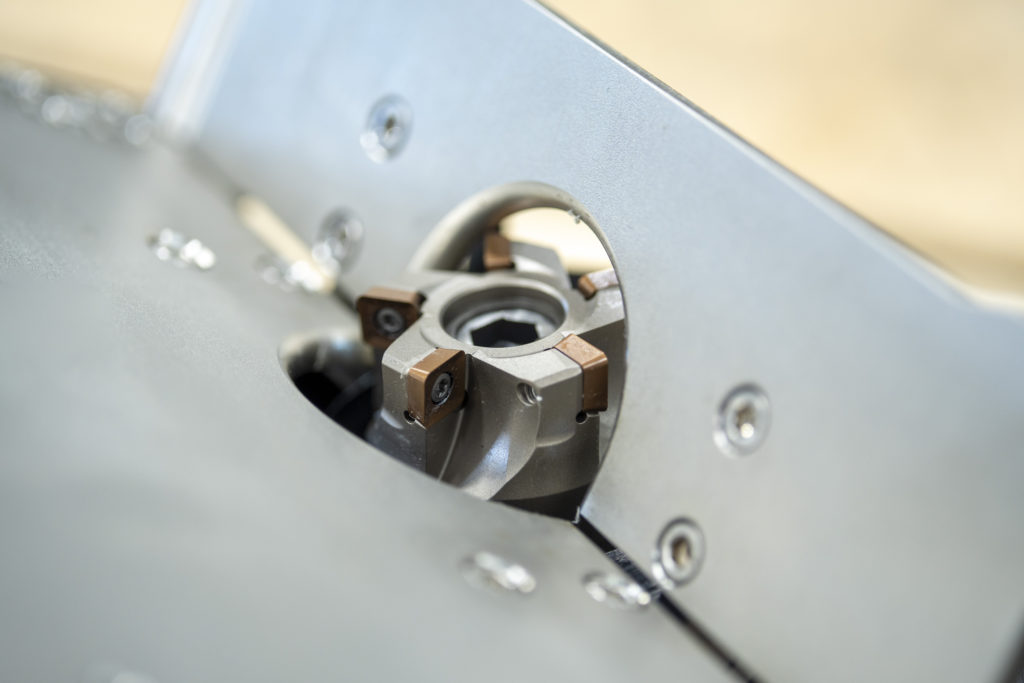
Spindle speed, typically measured in revolutions per minute (RPM), defines the rotational velocity of the spindle, which secures the milling head. This parameter directly influences the interaction between the cutting tool and the workpiece. Selecting an optimal spindle speed requires consideration of multiple factors, including material characteristics, operation type, and workpiece dimensions.

Why does choosing the right speed matter and what can it affect?
Correctly adjusting the spindle speed enhances operational versatility, ensuring adherence to specific beveling parameters such as bevel angle, width, pipe wall thickness (for pipe bevellers), and material hardness. General guidelines suggest lower speeds for harder materials to minimize tool wear and prevent damage, while softer or thinner materials may benefit from higher speeds to achieve superior surface finishes. Proper utilization of adjustable spindle speed broadens the machining capabilities of bevelling equipment, as both feed rate and spindle speed collectively influence the final machining outcome.

Spindle Speed Optimization for Different Materials
Bevelling machines operate with the workpiece fixed in position while the cutting head rotates. Adjustments to spindle speed are essential for optimizing cutting efficiency and ensuring safe operation. Cutting speed parameters are typically specified by the manufacturer of the cutting tool, based on the machinability of different materials. Operators must fine-tune these parameters considering factors such as surface quality requirements, material properties, and process efficiency.
Although most bevellers can process multiple materials by selecting appropriate cutting inserts, certain materials require specific speed settings:


Aluminium – the highest speed
Aluminium demands high spindle speeds to maximize efficiency and maintain superior finish quality. However, excessive speeds can induce tearing, necessitating a controlled approach with specialized inserts.

Recommended products: all of our bevellers can be used at the highest speed, however for aluminium processing we use special inserts at the maximum rotational speed – BM-6, BM-7, BM-18, BM-18A, SBM-500
Mild Steel – medium speed
Mild steel benefits from medium-speed settings, which balance efficiency, tool longevity, and weld preparation quality. Proper control of speed and pressure contributes to precision bevels, facilitating stronger welded joints.

Recommended products: BM-25S, BM-7, BM-18, BM-18A, BM-20plus, BM-21, BM-21S, BM-25, BM-30WM, ABM-30, ABM-50, SBM-500, PRO 2 PB, PRO-5 PB, PRO-10 PB, PRO-40 PBS, BM-6 Battery, ABM-R5, ABM 50 DD VARIO, ABM 50 DD
Hard materials – the lowest speed
For hard materials, lower spindle speeds are required to prevent excessive heat buildup, which can cause work hardening and premature tool degradation. Controlled speeds facilitate precise machining while preserving tool integrity.
Recommended products: ABM-28, ABM-30, ABM-50, SBM-500, PRO 2 PB, PRO-5 PB, PRO-10 PB, PRO-40 PBS , ABM 50 DD VARIO, ABM 50 DD

Stainless Steel – the lowest speed
Stainless steel requires low-speed settings to maintain its mechanical integrity and corrosion resistance. High speeds can induce excessive heat, leading to discoloration and structural distortion.
Depending on the task, desired bevel’s width, and a type of application one can choose a suitable machine from PROMOTECH’s portfolio. There is a wide variety of bevellers that feature speed adjustment and stainless steel parts, making them suitable for processing stainless steel. These include the BM-18 multitask beveller, its pneumatic version BM-18A, as well as portable pipe bevellers PRO-2 PB, PRO-5 PB, PRO-10 PB, and auto feed plate bevellers ABM-14, ABM-28, ABM-29, ABM-50, or upcoming soon new model ABM-50 DD Vario. There is also the stationary bevelling machine SBM-500.
Please check the table below to find out the most suitable configuration for bevelling stainless steel.
| Machine Name | Tool type |
| BM-18 | Multitask Plate and Pipe Beveller | NKL-0509-05-00-00-0 |
| BM-18A | Pneumatic Plate Beveller | NKL-0640-07-00-00-0 |
| BM-21S | Stainless Steel Plate & Pipe Beveler (discontinued) | Ready to use with SS |
| BM-25 | Plate Beveling Machine | ZST-0715-24-00-00-0 set |
| BM-25S | Stainless Steel Plate & Pipe Beveller – NEW | Ready to use with SS |
| ABM-14 | Plate and Pipe Beveler | FRZ-000588 |
| ABM-28 | Auto Feed Plate Beveler | PLY-00835 |
| ABM-29 | Industrial Shearing Beveller – NEW | FRZ-000599 |
| ABM-30 | Auto Feed Trackless Beveller | ZST-0690-16-00-00-0 set |
| ABM 50 | Auto Feed Bevelling Machine | PLY-00835 |
| ABM 50 DD / DD VARIO | Auto Feed Bevelling Machine | PLY-00835 |
| SBM-500 | Stationary Bevelling Machine | PLY-00835 |
| PRO 2 PB | Compact Pipe Beveler | Use Titan coated toolbit |
| PRO-5 PB | Portable Pipe Beveler | Use Titan coated toolbit |
| PRO-10 PB | Portable Pipe Beveler & Flange Facer | Use Titan coated toolbit |
| PRO-40 PBS | Stationary Pipe Beveling Machine | PLY-00835 |
| PRO-40 PBS 2 | Stationary Pipe Beveling Machine | PLY-00835 |

When it comes to bevelling angles, we offer a variety of machines with angle ranges spanning from 0 to 90 degrees (specific capabilities vary by machine; please refer to the user manual for details). Selecting the appropriate machine with the desired angle range is all that is required.
Bevelling Angles and Contamination Prevention
PROMOTECH offers a wide range of bevelling machines with angle adjustability spanning 0 to 90 degrees. Machine selection should align with the specific angular requirements of the application (refer to user manuals for detailed specifications).

Other common bevel shapes include double bevels, which have angled cuts on both sides for enhanced weld strength, and J-bevels, which create a smooth, curved transition that minimizes material usage while maintaining structural integrity.
Avoiding contamination while bevelling stainless steel
Stainless steel’s corrosion resistance is attributed to its chromium oxide layer. Contamination—especially from carbon steel particles—can compromise this layer, leading to oxidation and corrosion. To maintain stainless steel integrity, precautions should include: use of dedicated tools and inserts, minimization of cross-contamination risks, control of heat exposure and application of appropriate cleaning techniques.
To find out more check our blog article Stainless Steel Bevelling — PROMOTECH Bevelling

Important Factors in Achieving Desired Bevel Quality
The most major aspect is ensuring the appropriate machine is matched to the corresponding material and its feed speed is directly correlated to the bevelling speed.

Additionally, it’s important to avoid prolonged operation at maximum rotation speeds to prevent overheating and ensure the longevity of the equipment. Using cooling fluids or lubricants during the bevelling of metals can significantly reduce heat build-up and prolong the life of both the tool and the material.


Conclusion
Mastering bevelling techniques with variable spindle speeds is fundamental to achieving optimal results across diverse materials and applications. By systematically selecting appropriate spindle speeds—considering material hardness, cutter dimensions, and desired surface finish—operators can enhance precision, efficiency, and overall machining performance. As industrial demands evolve, the ability to optimize spindle speed will remain critical in maximizing machine productivity and ensuring high-quality beveling outcomes.